Hit a Pothole in Philadelphia? How to Get Your Car Fixed and Who Pays
Hit a pothole in Philly? How to document damage, when the City or PennDOT will (and won't) pay, how insurance works, and where to get a free estimate.
By Autoshow Collision Center · 932 Reed Street, South Philadelphia

Every winter and spring, freeze-and-thaw cycles open up craters on Philly streets, leaving drivers with cracked bumpers, torn splash shields, scraped rocker panels and bent wheels. If you just hit one, you probably have two questions: Is my car safe to drive? and Can I get the City to pay for this?
We've been repairing cars in South Philadelphia since 1974, and this guide walks through what to do, what the law actually says about pothole claims in Pennsylvania, and how to get your car repaired.
Step 1: Check Your Car Before You Keep Driving
Pull over somewhere safe and take a look. Pothole damage isn't always obvious from the driver's seat. Watch for:
- A tire that's losing air, bulging on the sidewall, or a wheel that's cracked or bent.
- Pulling to one side or a crooked steering wheel on a straight road.
- New clunks, rattles or vibration that weren't there before.
- Cracked or loose bumper covers, hanging splash shields, or plastic dragging underneath.
- Warning lights on the dash.
If the car doesn't feel right, don't push it. A damaged tire or suspension part can get worse fast. Our 24/7 towing service can bring your vehicle straight to our shop from anywhere in the Philadelphia area.
Step 2: Document Everything Right Away
Whether you file with your insurer, the City, or both, the paperwork starts at the scene. Before the pothole gets patched (or you forget which block it was on):
- Photograph the pothole from a few angles, with something for scale if it's safe to do so.
- Photograph the damage to your car: tires, wheels, bumper, underside.
- Write down the exact location: nearest address or cross streets, which lane, and the date and time.
- Keep every receipt: towing, tires, repairs, rental.
The City of Philadelphia's claim form specifically asks for photos of both the damaged property and "the defective condition that caused the loss (i.e., pothole, tree, etc.)," so these pictures matter.
Step 3: Report the Pothole
Reporting protects the next driver and creates a record. The City of Philadelphia takes pothole reports through Philly311 (call 311, or use the online form or app). According to the City, the Department of Streets typically repairs potholes within three business days. If the pothole is within 18 inches of trolley tracks, SEPTA gets involved in the repair.
Not every street in Philadelphia belongs to the City. Some roads are state routes maintained by PennDOT. If you report a pothole on a state road through 311, the Streets Department will inspect it and forward the report to PennDOT. You can also report it to PennDOT directly at 1-800-FIX-ROAD or through the PennDOT Customer Care Center.
Step 4: Figure Out Who Maintains the Road
This is the step most people skip, and it decides whether a claim against the government is even possible.
City-maintained streets: a claim is possible, but not automatic
Under Pennsylvania's governmental immunity law, a local agency like the City can be liable for a dangerous condition of streets it owns. But the law puts the burden on you: you have to show the City had actual notice, or could reasonably be charged with notice, of the pothole early enough to have fixed it (42 Pa.C.S. § 8542(b)(6)). A pothole that opened up overnight is a much harder claim than one that's been reported to 311 for weeks.
Two more rules matter:
- Insurance comes first. Pennsylvania law deducts any insurance benefits you receive or are entitled to receive from what you can recover from a local agency (42 Pa.C.S. § 8553(d)). The City's claim form puts it plainly: recovery is limited to your uninsured loss, and your insurance company can't go after the City to get its money back. In practice, that often means the City claim covers things like your collision deductible, or the full bill if you don't carry collision coverage.
- The deadline is six months. The City's Office of Risk Management must receive your completed claim form within six months of the incident, or it will be rejected. That lines up with Pennsylvania's six-month notice requirement for claims against government units (42 Pa.C.S. § 5522).
State (PennDOT) roads: property damage isn't recoverable
If the pothole is on a state-maintained road, the news is worse. Pennsylvania's sovereign immunity law says that for potholes on Commonwealth highways, "Property damages shall not be recoverable" (42 Pa.C.S. § 8522(b)(5)). PennDOT's own damage claim page says you have the right to file, but that the state's claims office is required to deny pothole vehicle-damage claims "except in very limited circumstances." For state roads, your own insurance is usually the realistic path.
The City publishes a map and list of state routes in Philadelphia so you can check which kind of road you were on.
Step 5: Filing a Pothole Claim With the City of Philadelphia
If the pothole was on a City street, here's what the City's general claim form asks for with a vehicle claim:
- A copy of your vehicle registration covering the date of the incident
- A copy of your insurance declarations page covering that date
- Two written estimates itemizing parts, price and labor
- Photos of your damaged vehicle
- Photos of the pothole or other defect that caused the damage
The form also requires your date of birth and Social Security number, and asks you to name the City department involved (for potholes, that's generally Streets). Send it by email to Risk.Management@phila.gov or by mail to the Office of Risk Management, 1515 Arch Street, 14th Floor, Philadelphia, PA 19102. If the damage came from a Philadelphia Water Department trench or cave-in, the City has a separate PWD claim form on the same page.
The City's form also notes that Pennsylvania's statute of limitations is two years from the date of loss, so if your claim isn't resolved, a lawsuit has to be filed within that window. For legal advice on your specific situation, talk to an attorney.
Need estimates for your claim? We offer free estimates on all collision and auto body work. Book a time online or call us at (215) 463-1755.
Step 6: Should You Go Through Your Own Insurance?
According to the Insurance Information Institute, pothole damage is usually covered if you have collision coverage, which is optional on a standard policy. Collision pays for the repair minus your deductible. It does not cover ordinary wear and tear from rough roads.
The III also points out that a lot of pothole damage is to wheels and tires and may cost less than your deductible, in which case filing may not make sense. Get an estimate first, then decide.
If you do file, we work directly with all insurance companies to make the claims process as smooth as possible. Our guide on how to file an insurance claim after a car accident in Philadelphia walks through the process, and remember that your insurer can't force you to use its body shop.
What Pothole Damage Can We Repair?
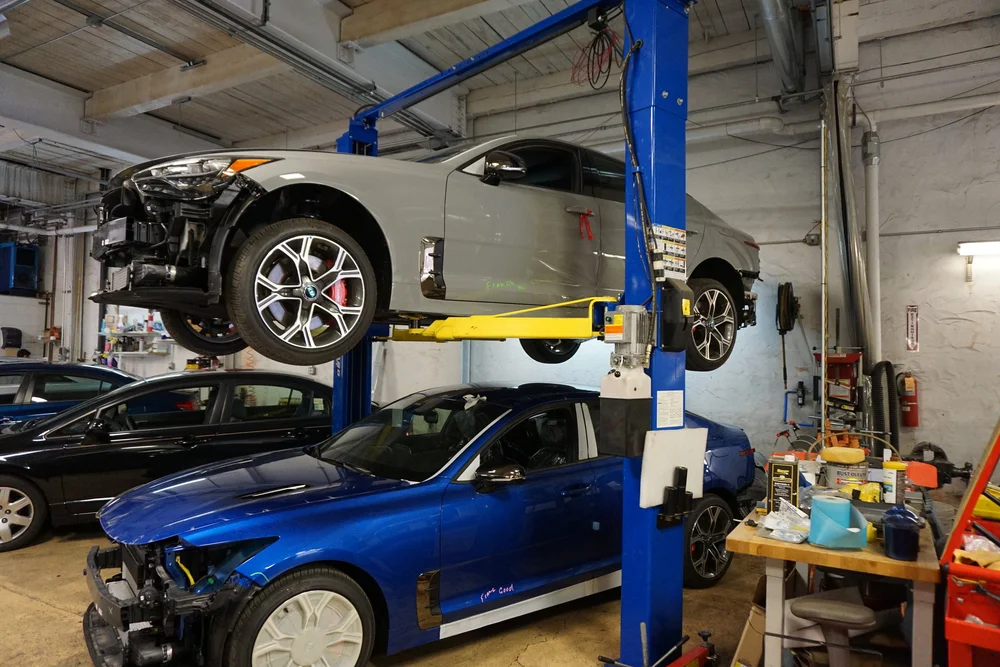
Potholes cause a mix of body and mechanical damage. On the body side, we handle:
- Bumper repair: cracked, scraped or pushed-in bumper covers, a common result of dropping into a deep hole.
- Dent and scratch repair: scraped rocker panels and lower doors, including paintless dent repair for minor dents.
- Auto painting: refinishing and color matching after body repair.
- Frame straightening: for hard impacts that bend structural parts.
For mechanical work like tires, suspension and alignment, we point customers to our friends at Classic Auto Repair South Philly. Not sure which kind of damage you have? Stop by and we'll take a look.
Frequently Asked Questions
Will the City of Philadelphia pay for pothole damage to my car?
Sometimes. If the pothole was on a City-owned street, you can file a claim with the Office of Risk Management. To recover, you generally have to show the City knew or should have known about the pothole in time to fix it, and recovery is limited to losses your insurance doesn't cover.
How long do I have to file a pothole claim in Philadelphia?
The City's Office of Risk Management must receive your completed claim form within six months of the incident. Pennsylvania's statute of limitations for a lawsuit is two years from the date of loss.
Does PennDOT pay for pothole damage?
Almost never. Pennsylvania law (42 Pa.C.S. § 8522(b)(5)) says property damage from potholes on state highways is not recoverable, and PennDOT says its claims office is required to deny these claims except in very limited circumstances.
Does car insurance cover pothole damage?
Usually, if you carry collision coverage. You'll pay your deductible, and normal wear and tear from rough roads isn't covered.
Get a Free Pothole Damage Estimate in South Philly
Autoshow Collision Center is a family-owned auto body shop at 932 Reed Street in South Philadelphia, serving Philly drivers since 1974. We offer free estimates, work with all insurance companies, provide 24/7 towing, and help arrange rental cars while yours is in the shop.
Book your free estimate online, call (215) 463-1755, or email autoshowcollision@msn.com.
Hours: Monday–Friday 8 AM–4 PM, Saturday 8 AM–11 AM.
This article is general information, not legal advice. Laws and City procedures can change; check the linked official sources or consult an attorney about your specific claim. Sources checked September 28, 2026.
Ready for a Free Estimate?
Autoshow Collision Center — 932 Reed Street, Philadelphia, PA 19147
Mon–Fri 8AM–4PM • Sat 8AM–11AM